-
-

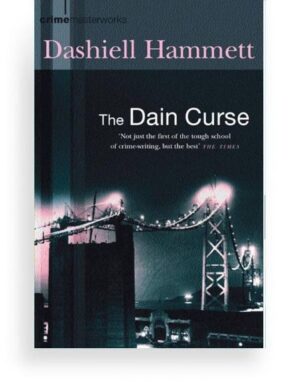
The Dain Curse
€10,00di Dashiell Hammett
Miss Gabriel Dain Leggett is young and wealthy, with a penchant for morphine and religious cults. She also has an unfortunate effect on the people around her. They die – violently. Is she the victim of a family curse? The short, squat, utterly unsentimental Continental Op, the best private detective around, has his doubts and finds himself confronting something infinitely more dangerous. This is the Continental Op’s most bizarre case.
-
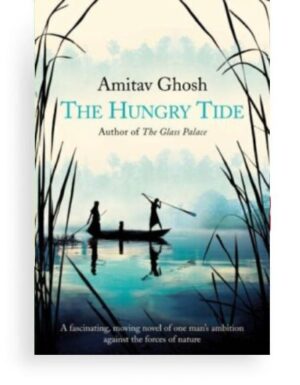
The Hungry Tide
€14,40di Amitav Ghosh
‘Amitav Ghosh is such a fascinating and seductive writer… I cannot think of another contemporary writer with whom it would be this thrilling to go so far, so fast’ The Times
January 2001: A small ship, led by wealthy Scotsman Daniel Hamilton, arrives in the Sundarbans, a vast archipelago of islands in the mythical river Ganges, a half-drowned land where the waters of the Himalayas merge with the incoming tides of the sea.
In the Sundarbans the tides reach more than 100 miles inland, and every day thousands of hectares of forest disappear only to re-emerge hours later. Dense as the mangrove forests are, from Hamilton’s point of view, it is only a little less barren than a desert.
The eccentric Scotsman and the scientists on board the ship disembark to study this little-known environment, and to trace the journeys of the descendants of this society. Their goal? To create a utopian society, of all races and religions, and conquer the might of the Sundarbans.
-
A passage to India
€13,65di E.M. Forster
When Adela and her elderly companion Mrs Moore arrive in the Indian town of Chandrapore, they quickly feel trapped by its insular and prejudiced British community. Determined to explore the ‘real India’, they seek the guidance of the charming and mercurial Dr Aziz, a cultivated Indian Muslim. But a mysterious incident occurs while they are exploring the Marabar caves with Aziz, and the well-respected doctor soon finds himself at the centre of a scandal that rouses violent passions among both the British and their Indian subjects. A masterly portrait of a society in the grip of imperialism, A Passage to India compellingly depicts the fate of individuals caught between the great political and cultural conflicts of the modern world.
A Passage to India, written by E.M. Forster and published in 1924, is one of the most acclaimed novels in English literature. Set against the backdrop of British colonial India, the novel explores complex themes such as colonialism, racial prejudice, cultural misunderstandings, and the challenges of communication between East and West.
Through vivid characters and evocative storytelling, Forster highlights the social and political tensions of the era, delivering a nuanced critique of British imperialism and its impacts. The narrative balances moments of humor, tragedy, and profound philosophical reflection, making it a timeless masterpiece.
This novel is ideal for lovers of classic literature, students of British colonial history, and anyone interested in cross-cultural relationships and postcolonial studies.
-
Joseph Andrews and Shamela
€10,80di Henry Fielding
Henry Fielding wrote both Joseph Andrews (1742) and Shamela (1741) in response to Samuel Richardson’s book Pamela (1740), of which Shamela is a splendidly bawdy travesty. Joseph Andrews begins as a parody, too, but soon outgrows its origins, and its deepest roots lie in Cervantes and Marivaux. In both stories, Fielding demonstrates his concern for the corruption of contemporary society, politics, religion, morality, and taste.
This revised and expanded edition follows the text of Joseph Andrews established by Martin C. Battestin for the definitive Wesleyan Edition of Fielding’s works. The text of Shamela is based on the first edition, and two substantial appendices reprint the preliminary matter from the second edition of Richardson’s Pamela and Conyers Middleton’s Life of Cicero, which is also closely parodied in Shamela. This Oxford World’s Classics edition also features a new introduction by Thomas Keymer which situates Fielding’s works in their critical and historical contexts.
-
Black Skin, White Masks
€17,00di Frantz Fanon
First published in English in 1968, Frantz Fanon’s seminal text was immediately acclaimed as a classic of black liberationalist writing. Fanon’s descriptions of the feelings of inadequacy and dependence experienced by people of colour in a white world are as salient and as compelling as ever. Fanon identifies a devastating pathology at the heart of Western culture, a denial of difference, that persists to this day. His writings speak to all who continue the struggle for political and cultural liberation in our troubled times.
-
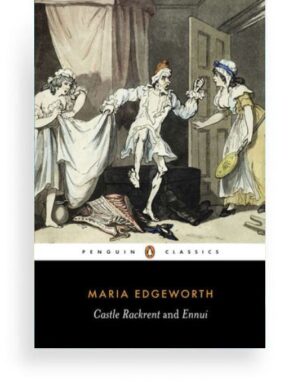
Castle Rackrent and Ennui
€14,00di Maria Edgeworth
Thady Quirk, devoted steward to the decaying estate of the Rackrent family, narrates a riotous story of four generations of a dying dynasty in Castle Rackrent (1800). Thady will defend his masters to the end, but eventually his naivety and blind loyalty cause him to ignore the warning signs as the family’s excesses lead them to ruin. This volume also includes Ennui, the entertaining ‘confessions’ of the Earl of Glenthorn, a bored, spoiled aristocrat. Desperate to be free from ‘the demon of ennui’, Glenthorn’s quest for happiness takes him through violence and revolution, and leads to intriguing twists of fate. Both novels offer a darkly comic and satirical exposé of the Irish class system, and a portrait of a nation in turmoil.
-
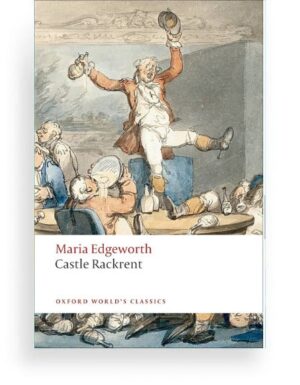
Castle Rackrent
€7,75di Maria Edgeworth
During the 1790s with Ireland in political crisis Maria Edgeworth made a surprisingly rebellious choice in Castle Rackrent her first novel she adopted an Irish Catholic voice to narrate the decline of a family from her own Anglo Irish class Castle Rackrent s narrator Thady Quirk givesus four generations of Rackrent heirs Sir Patrick the dissipated spendthrift Sir Murtagh the litigating fiend Sir Kit the brutal husband and gambling absentee and Sir Condy the lovable and improvident dupe of Thady s own son Jason With this satire on Anglo Irish landlords Edgeworth pioneered the regional novel and inspired Sir Walter Scott s Waverly 1814 She also changed the focus of conflict in Ireland from religion to class and boldly predicted the rise of the Irish Catholic Bourgeoisie With her satire on Anglo Irish landlords in Castle Rackrent 1800 Maria Edgeworth pioneered the regional novel and inspired Sir Walter Scott s Waverley 1814 Politically risky stylistically innovative and wonderfully entertaining the novel changes the focus of conflict in Ireland from religion to class and boldly predicts the rise of the Irish Catholic bourgeoisie
-