-
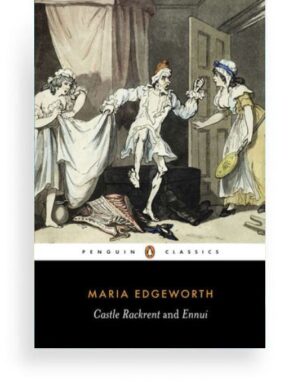
Castle Rackrent and Ennui
€14,00di Maria Edgeworth
Thady Quirk, devoted steward to the decaying estate of the Rackrent family, narrates a riotous story of four generations of a dying dynasty in Castle Rackrent (1800). Thady will defend his masters to the end, but eventually his naivety and blind loyalty cause him to ignore the warning signs as the family’s excesses lead them to ruin. This volume also includes Ennui, the entertaining ‘confessions’ of the Earl of Glenthorn, a bored, spoiled aristocrat. Desperate to be free from ‘the demon of ennui’, Glenthorn’s quest for happiness takes him through violence and revolution, and leads to intriguing twists of fate. Both novels offer a darkly comic and satirical exposé of the Irish class system, and a portrait of a nation in turmoil.
-

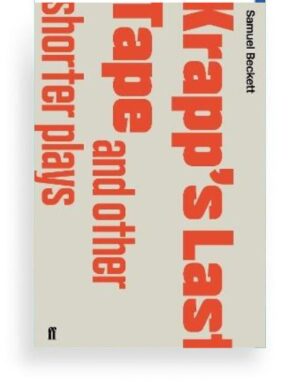
Krapp’s Last Tape and Other Shorter Plays
€14,25di Samuel Beckett
Krapp’s Last Tape was first performed by Patrick Magee at the Royal Court Theatre in October 1958, and described as ‘a solo, if that is the word, for one voice and two organs: one human, one mechanical. It fills few pages. It is perhaps the most original and important play of its length ever written.’ (Roy Walker)
The present volume brings together Krapp’s Last Tape and Beckett’s other shorter works or ‘dramaticules’ written for the stage. It will be complemented by a forthcoming Faber edition of dramatic works written for radio and screen.
Arranged in chronological order of composition, these shorter plays exhibit the laconic means and compassionate ends of Beckett’s dramatic vision.
KRAPP ‘Here I end this reel. Box – [Pause.] – three, spool – [Pause.] – five. [Pause.] Perhaps my best years have gone. When there was a chance of happiness. But I wouldn’t want them back. Not with the fire in me now. No, I wouldn’t want them back. [Staring motionless before him.]
-
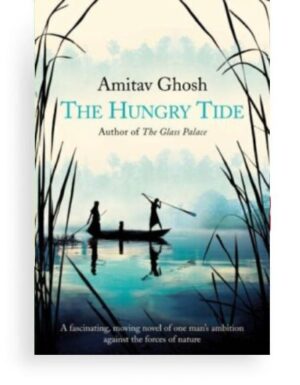
The Hungry Tide
€14,40di Amitav Ghosh
‘Amitav Ghosh is such a fascinating and seductive writer… I cannot think of another contemporary writer with whom it would be this thrilling to go so far, so fast’ The Times
January 2001: A small ship, led by wealthy Scotsman Daniel Hamilton, arrives in the Sundarbans, a vast archipelago of islands in the mythical river Ganges, a half-drowned land where the waters of the Himalayas merge with the incoming tides of the sea.
In the Sundarbans the tides reach more than 100 miles inland, and every day thousands of hectares of forest disappear only to re-emerge hours later. Dense as the mangrove forests are, from Hamilton’s point of view, it is only a little less barren than a desert.
The eccentric Scotsman and the scientists on board the ship disembark to study this little-known environment, and to trace the journeys of the descendants of this society. Their goal? To create a utopian society, of all races and religions, and conquer the might of the Sundarbans.
-

Theoretical Description and Practical Applications of Linguistic Corpora
€14,70by Roberta Facchinetti
This book is intended primarily as an introduction to linguistic corpora for any scholar, teacher or student who approaches them for the first time. To this aim, the author has provided an overview of their most typical features and contexts of exploitation, both in theoretical and in applied linguistics, together with a discussion on key issues pertaining to corpus design, compilation, and annotation. In so doing, an attempt has been made to clarify and systematize a few still foggy areas in this field, particularly from the terminological point of view. The book also includes three appendices, listing respectively all the corpora cited in the volume in alphabetical order, the software discussed and the other computerised resources quoted in the book. Every effort has been made to present the data and material in a clear, straightforward way, so as to enable the readers to glean information, to deepen their knowledge, and most of all to boost their desire for learning, which is the core of all theoretical knowledge and practical competence.
-
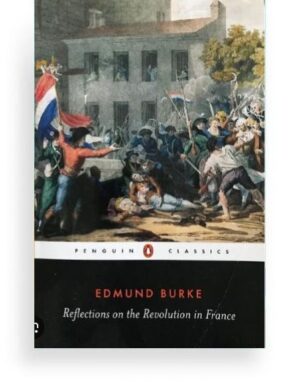
Reflections on the Revolution in France
€14,75by Edmund Buke
The most important works of Edmund Burke, the greatest political thinker of the past three centuries, are gathered here in one comprehensive volume. Accompanying his influential masterpiece, Reflections on the Revolution in France, is a selection of pamphlets, speeches, public letters, private correspondence and, for the first time, two important and previously uncollected early essays.
Philosopher, statesman, and founder of conservatism, Burke was a dazzling orator and a visionary theorist who spent his long political career fighting abuses of power. He wrote at a time of great change, against the backdrop of the revolt of the American colonies, the expansion of the British Empire, the collapse of Ireland, and the French Revolution. Burke argued passionately in support of the American revolutionaries and in equally impassioned opposition to the horrors of the unfolding French Revolution. Making a case for upholding established rights and customs, and advocating incremental reform rather than radical revolutionary change, Burke’s writings have profoundly influenced modern democracies up to the present day.
-
Singing is joy
€15,00by Silvio Zanon
A handbook dedicated to those with the desire to improve their knowledge of the Italian belcanto and the use of the voice in all types of musical genre. Ideal for gettng to know the secrets of vocal technique and the way the vocal apparatus is formed through the experience of a great Italian baritone who has treaded the boards of some of the most prestigeous theatres in the world.
Also available in Italian
-
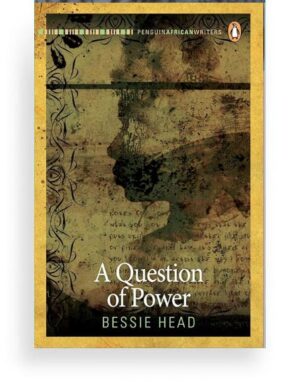
A Question of Power
€15,25di Bessie Head
In this semi-autobiographical novel, Head tracks the protagonist Elizabeth’s struggle to emerge from the oppressive social situation in which she finds herself, and from the nightmares and hallucinations that torment her.
Elizabeth, like the author, was conceived in an out-of-wedlock union between a black man and a white woman of social standing – a union outlawed by her country of birth, South Africa. Elizabeth leaves South Africa with her young son to live in Botswana, a country that has escaped some of the worst evils of colonial domination. But in rural Botswana she is once again faced with a constricting social system as the villagers are suspicious of her urban ways and frown upon her individualistic behaviour. They also bear her ill will on racial grounds because she is light skinned like the ‘Bushmen’ who are a despised tribe there.
Elizabeth suffers not only social isolation but intellectual deprivation as well. One of the few people with whom she can converse as an intellectual equal is the American peace corps volunteer, Tom. During the four years in which Elizabeth is plagued by mental, social and economic challenges, it is Tom, and her own love for and obligation to her young son that help her to survive this ordeal.
-
Cormac McCarthy: saggi a margine del canone
€16,00di Marco Petrelli e Giulio Segato
In questo libro, Giulio Segato e Marco Petrelli hanno scelto di dedicarsi a quelle che definiscono “province” dell’autore, ovvero tanto alle opere meno frequentate da critica e pubblico, quanto a prospettive critiche liminali o inedite sui romanzi più attestati. Opere e approcci trascurati, quindi, ma nient’affatto secondari. La volontà di Cormac McCarthy: saggi a margine del canone è infatti quella di dimostrare come la produzione periferica dell’autore, oltre a possedere un valore letterario certamente paragonabile a quello delle opere centrali, sia in grado di gettare su queste ultime una luce nuova e stimolante.
-
We Don’t Stop Here: 20 anni di MulHolland Drive
€16,00di Franco Lonati
Nel 2016, un sondaggio condotto da BBC Culture presso 177 critici specializzati di 36 nazioni ha incoronato Mulholland Drive come miglior film del XXI secolo. Una precedente indagine realizzata da Sight and Sound nel 2012, volta a determinare i 100 miglior film di sempre secondo la critica, vide il film di Lynch al 28° posto della graduatoria, unico film del nuovo millennio a comparire nella speciale classifica, che vide Vertigo scalzare Citizen Kane dalla prima posizione che ha sempre occupato in classifiche analoghe. Si tratta, naturalmente, di sondaggi da prendere con le pinze, ma che dimostrano lo status di grande film ormai raggiunto da Mulholland Drive. Nel suo piccolo, lo dimostra anche questo volume, che vuole celebrare i vent’anni dall’uscita del film e raccoglie contributi di studiosi di diversa provenienza, non solo, o non principalmente, esperti di cinema. Ognuno guarda al film da una diversa prospettiva, avanzando nuove ipotesi e proponendo suggestive letture. Perché in fondo è questa la vera grandezza di Mulholland Drive: esempio perfetto di ‘opera aperta’, il film non smette, dopo due
decenni, di suscitare domande, di incitare interpretazioni, di invitare chi lo guarda – anche per l’ennesima volta – a trovare nuove chiavi di lettura.
Presentato a Cannes nel maggio 2001 e uscito nelle sale americane nell’ottobre dello stesso anno, Mulholland Drive si è subito imposto non solo come uno dei film più ispirati di David Lynch, ma anche come una delle pellicole più enigmatiche e affascinanti della storia del cinema. A vent’anni esatti dalla sua uscita, la reputazione critica del film si è ulteriormente rafforzata, tanto che molti esperti lo considerano il film più importante di questo scorcio di terzo millennio. Il successo duraturo del film dipende certamente, oltre che dalle sue indubbie qualità visuali e narrative, dal fatto di essere un’opera aperta, passibile di letture e interpretazioni virtualmente infinite. Il presente volume raccoglie saggi di studiosi provenienti da diversi ambiti, tutti accomunati dalla passione per il film e dalla volontà di continuare a indagare i suoi labirintici meandri.