-
Introducción al estudio de la literatura
€20,20di Franco Brioschi e Costanzo Di Girolamo
La claridad y la pertinencia de la teoría, la precisión en el análisis de las cuestiones concretas, la abundancia de ejemplos y la riquísima información hacen que el libro quizá sea la mejor introducción que hoy puede encontrarse al estudio de la literatura en la universidad FRANCISCO RICO.
-

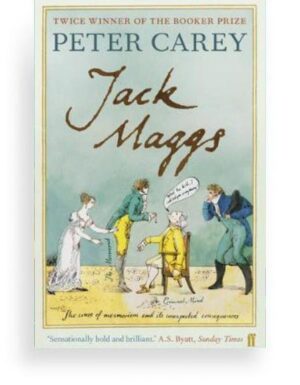
Jack Maggs
€11,00by Peter Carey
London,1837. Jack Maggs, raised and deported as a criminal, has returned from Australia, in secret and at great risk. What does he want after all these years, and why is he so interested in the comings and goings at a plush townhouse in Great Queen Street? And why is Jack himself an object of such interest to Tobias Oates, celebrated author, amateur hypnotist and fellow burglar – in this case of people’s minds, of their histories and inner phantoms? A thrilling story of mesmerism and possession, of dangerous bargains and illicit love against the backdrop of Victorian London.
-
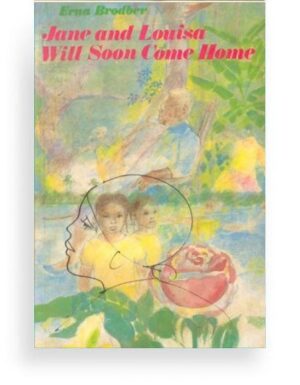
Jane and Louisa Will Soon come Home
€11,00di Erna Brodber
Enter the world of the protagonist, who explores the multiple dimensions of family and origin for a woman in a rapidly-changing Jamaica. A challenging but highly engaging read. .. not since George Lamming’s In The Castle Of My Skin have we had a first time novel with this kind of effortless , bottomless detail of life and leaf and sorrow
-
Joseph Andrews and Shamela
€10,80di Henry Fielding
Henry Fielding wrote both Joseph Andrews (1742) and Shamela (1741) in response to Samuel Richardson’s book Pamela (1740), of which Shamela is a splendidly bawdy travesty. Joseph Andrews begins as a parody, too, but soon outgrows its origins, and its deepest roots lie in Cervantes and Marivaux. In both stories, Fielding demonstrates his concern for the corruption of contemporary society, politics, religion, morality, and taste.
This revised and expanded edition follows the text of Joseph Andrews established by Martin C. Battestin for the definitive Wesleyan Edition of Fielding’s works. The text of Shamela is based on the first edition, and two substantial appendices reprint the preliminary matter from the second edition of Richardson’s Pamela and Conyers Middleton’s Life of Cicero, which is also closely parodied in Shamela. This Oxford World’s Classics edition also features a new introduction by Thomas Keymer which situates Fielding’s works in their critical and historical contexts.
-
Joseph Knight
€12,00by James Robertson
‘A book of such quality as to persuade you that historical novels are the true business of the writer.’
Daily Telegraph
A gripping, shocking story of history, enlightement and slavery from the bestselling author of THE FANATIC. JOSPEH KNIGHT confirms James Robertson as one of our foremost novelists.
Exiled to Jamaica after the Battle of Culloden in 1746, Sir John Wedderburn made a fortune, alongside his three brothers, as a faux surgeon and sugar planter. In the 1770s, he returned to Scotland to marry and re-establish the family name. He brought with him Joseph Knight, a black slave and a token of his years in the Caribbean.
Now, in 1802, Sir John Wedderburn is settling his estate, and has hired a solicitor’s agent, Archibald Jamieson, to search for his former slave. The past has haunted Wedderburn ever since Culloden, and ever since he last saw Knight, in court twenty-four years ago, in a case that went to the heart of Scottish society, pitting master against slave, white against black, and rich against poor.
As long as Knight is missing, Wedderburn will never be able to escape the past. Yet what will he do if Jamieson’s search is successful? And what effect will this re-opening of old wounds have on those around him? Meanwhile, as Jamieson tries to unravel the true story of Joseph Knight he begins to question his own motivation. How can he possibly find a man who does not want to be found?
James Robertson’s second novel is a tour de force, the gripping story of a search for a life that stretches over sixty years and moves from battlefields to the plantations of Jamaica, from Enlightenment Edinburgh to the back streets of Dundee. It is a moving narrative of history, identity and ideas, that dramatically retells a fascinating but forgotten episode of Scottish history.
-
-
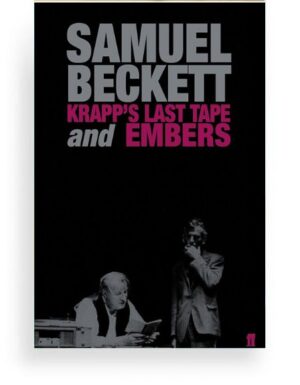
Krapp’s Last Tape and Embers
€16,30di Samuel Beckett
‘Krapp’s Last Tape’ was first performed by Patrick Magee at the Royal Court Theatre in October 1958, and has since been played by a host of distinguished actors including Albert Finney and Max Wall. ‘Embers’ was specially written for radio and first performed in 1959.
-
Krapp’s Last Tape and Other Shorter Plays
€14,25di Samuel Beckett
Krapp’s Last Tape was first performed by Patrick Magee at the Royal Court Theatre in October 1958, and described as ‘a solo, if that is the word, for one voice and two organs: one human, one mechanical. It fills few pages. It is perhaps the most original and important play of its length ever written.’ (Roy Walker)
The present volume brings together Krapp’s Last Tape and Beckett’s other shorter works or ‘dramaticules’ written for the stage. It will be complemented by a forthcoming Faber edition of dramatic works written for radio and screen.
Arranged in chronological order of composition, these shorter plays exhibit the laconic means and compassionate ends of Beckett’s dramatic vision.
KRAPP ‘Here I end this reel. Box – [Pause.] – three, spool – [Pause.] – five. [Pause.] Perhaps my best years have gone. When there was a chance of happiness. But I wouldn’t want them back. Not with the fire in me now. No, I wouldn’t want them back. [Staring motionless before him.]
-