-


Psicologia sociale della moda – Abbigliamento e identità
€25,00di Paola Pizza
C’è un messaggio profondo dietro la superficie della moda e per comprenderlo occorre la psicologia che analizza non solo l’immagine, ma anche la psiche.
Questo libro si propone di indagare la moda come un fenomeno sociopsicologico che contribuisce alla definizione dell’identità degli individui e dei gruppi, e aiuta a raggiungere gli obiettivi. Guarda ai significati della moda non fermandosi all’individuo e alle dinamiche intrapsichiche, ma analizzando anche la sua appartenenza ai gruppi, e le sue interazioni sociali.
I capitoli del libro si articolano in base ai cinque principi del comportamento sociale (obiettivi, identità, conoscenza, influenza, comunicazione)e sono arricchiti da esempi tratti da film, serie televisive e letteratura contemporanea. Questa seconda edizione è aggiornata con una bibliografia più ampia e con un paragrafo sugli studi sociopsicologici sulla moda.
Inoltre, i capitoli sono completati dall’analisi dei problemi sociali più attuali della psicologia quotidiana con la moda. La conclusione del libro formula una speranza: che la moda sia strumento di benessere, e aiuti a valorizzare l’unicità di ogni persona, superando i condizionamenti, il conformismo e gli stereotipi estetici.
-
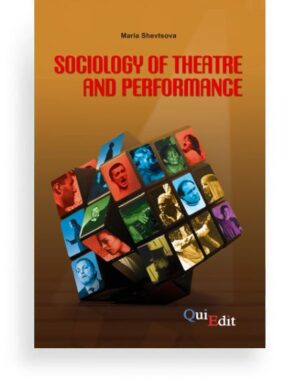
Sociology of Theatre and Performance
€25,00by Maria Shevtsova
These essays from 1983 to 2008 are pioneering in establishing the field of the sociology of theatre and performance. They cover various aspects, focusing on theoretical and methodological principles, the problem of contextualisation and of defining contexts for theatre practice, and approaches to analysing and understanding performances in terms that are aesthetic as well as sociocultural at one and the same time. It is in this area of artistic works as process and achievements, which the sociology of the arts in general has found notoriously difficult, that the book makes its most innovative contribution.
The book also provides examples of audience analysis, introducing the category of ethnic identification, which studies of audiences had neglected, including those by Pierre Bourdieu concerning museum attendance and viewing in galleries. Here domographics and other quantitative factors are correlated with spectators’ assessment of theatre productions, emphasising the importance of such qualitative material for grasping the social significance and dynamics of theatre/performance.
The book’s wide range of interest, perceived and presented from a number of different angles, employs a diverse range of methods: conceptual framing, cultural embedding, textual deconstruction, empirically-based sociocultural performance analysis, ethnographic research, media documentation, questionnaire surveys and interviews with actors, directors and spectators. Different types of performances are discussed, going from the mainstage productions of path-breaking directors of the twentieth and twenty-first centuries – including opera – to performances with a political thrust, or to community groups involved in identifying and authenticating multiculturalism.